

Tag: Longobards
-
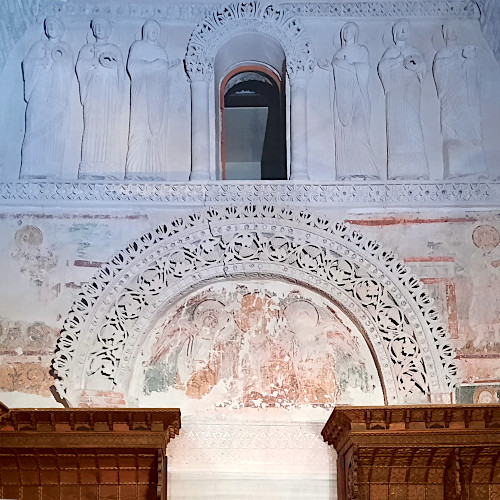
The Tempietto longobardo of Cividale del Friuli
The doorway that gives access to the Tempietto longobardo of Cividale del Friuli not only separates the spaces of matter. It also symbolizes that moment of transit, in history and arts, that characterized the epic of the Longobards in Italy. In the ancient Roman village of Forum Iulii stands the limen crossed by Alboin in…
-
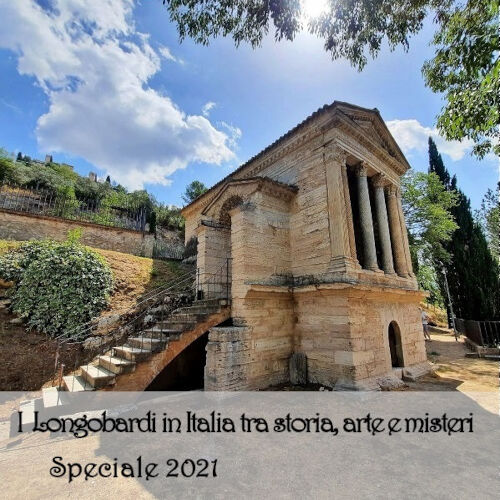
The Temple of Clitumnus, sacred center of the Longobards
There are places that, even across the centuries, preserve intact that admirable perception of innate sacredness. A stream of water flowing gracefully in the moonlight on the valley floor. A silent forest of beech and cypress trees, the edge of which declines impetuously along the banks of an ancient spring: the Sources of Campello reveal…
-
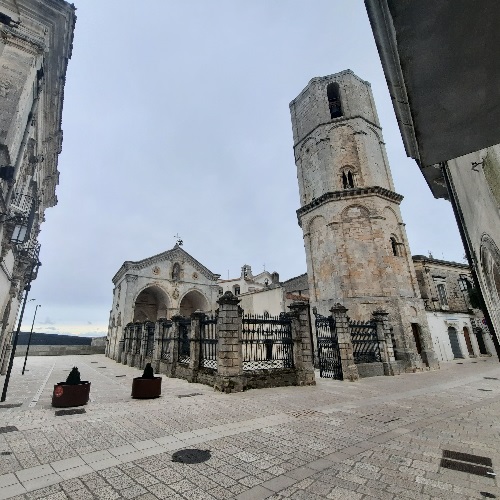
The Sanctuary of Saint Michael on Mount Gargano
On the Gargano promontory, in northern Apulia, there is a monumental cave complex which, since ancient times, has been a sacred place of special significance, where the sublime reveals itself and one encounters the divine. According to tradition, the Archangel Michael, commander of the heavenly hosts, chose the grotto as a place of worship and…
-

The city of Spoleto and the sense of beauty over the centuries
It is not easy to find a place that takes on the value of a monumental complex as in the city of Spoleto1. It is a site of historical, artistic, ethno-anthropological importance that preserves buildings from different eras, admirably integrated with each other. Often, however, the opposite happens: archaeology shows how easy it is to…
-
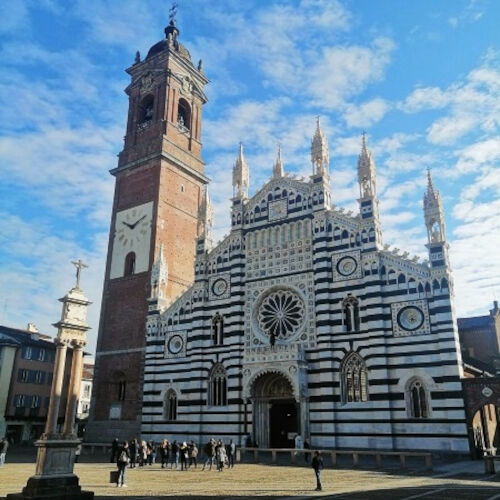
The Theodelinda Chapel and the Iron Crown of Monza
It is 22 January 627. The Lombard queen Theodelinda has just passed away. Her body is buried in the Basilica of Saint John in Monza, a city she held very dear, beside the tomb of her husband Agilulf. It was here that, between 595 and 600, the queen had a first church built, dedicated to…
-

The symbols of the Basilica of San Michele Maggiore in Pavia
The imposing Basilica of San Michele Maggiore dominates the centre of Pavia. It is the Romanesque soul of the city, still alive and present today. With its massive appearance, the sandstone walls embroidered with friezes and symbols tell of the history, faith, and culture of the Middle Ages. Like an illustrated compendium, they reveal a…