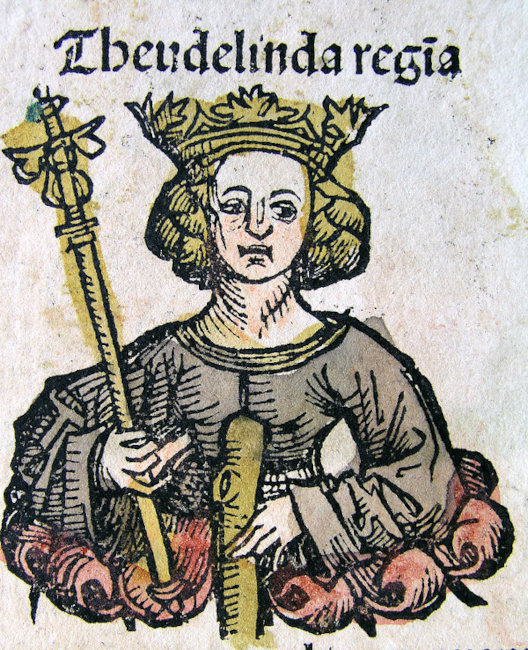
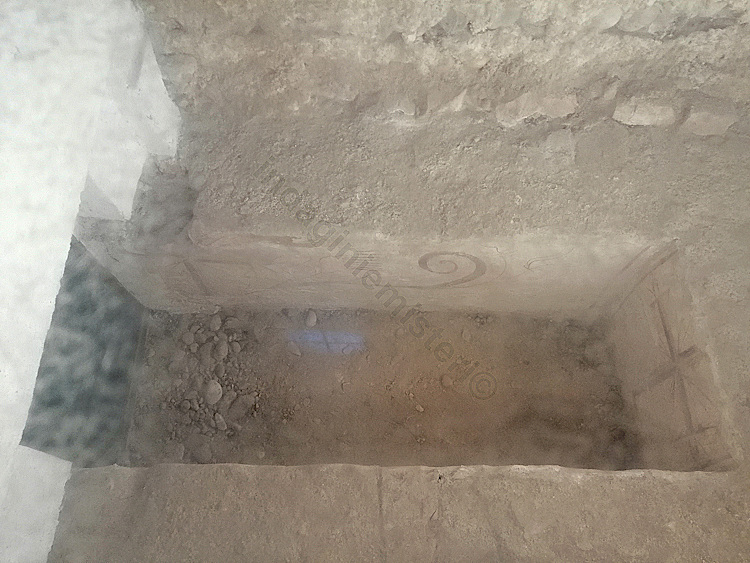
It is 22 January 627. The Lombard queen Theodelinda has just passed away. Her body is buried in the Basilica of Saint John in Monza, a city she held very dear, beside the tomb of her husband Agilulf. It was here that, between 595 and 600, the queen had a first church built, dedicated to the Baptist, which, according to tradition, had been inspired directly by God. It is said that Theodelinda, while resting in the shade of a great oak tree, was visited by the Holy Spirit in the form of a white dove1. The creature spoke a single word to her, modo (“here”), inviting her to build a church on that spot. The queen, like the Virgin Mary at the Annunciation, replied simply etiam (“yes”). From the combination of these two words, the toponym Modoezia would have been born, the ancient name of present-day Monza.
Beyond the myth, this later tradition aimed to acknowledge Theodelinda’s role in converting the Lombards to Catholicism. This process profoundly shaped the religious and political history of early medieval Italy.
Theodelinda conceived her cathedral, a sacred temple and symbol of Lombard identity, as a marvel. The rulers who succeeded her adorned it with exquisite goldsmith work and precious liturgical furnishings. Thus, it became one of the most important ecclesiastical treasuries in the Western world. To the already substantial collection of finely crafted Lombard gold were added gifts from across the Italian peninsula and even from the papal court of Gregory the Great. Henceforth, the history of the Duomo Treasury became inseparably bound to that of the city of Monza, accompanying its story through centuries of splendour, wars, and plunder.

Theodelinda, an extraordinary choice
Theodelinda lived a life as extraordinary as it was eventful. A woman of great intellectual and moral stature, she suddenly found herself at the helm of the warlike Lombard people after the death of her husband Authari. The premature passing of the beloved sovereign plunged the whole of Italy into grief. It also left the young queen with an immense responsibility. Although endowed with notable diplomatic skills, Theodelinda was aware that leading a warrior people required above all authority and military competence. For this reason, she chose to marry Agilulf, a Lombard nobleman and distant relative of the late king. To him she entrusted the crown of the kingdom.
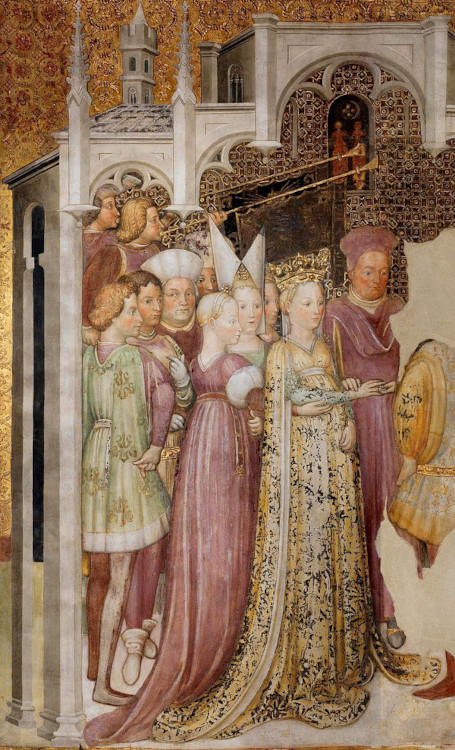
The new marriage was celebrated at Lomello in 590. It ensured political continuity and stability for the Lombards, as well as the continuation of effective strategies for defending their borders. It is the eighth-century historian Paul the Deacon who, in his Historia Langobardorum, recounts in a somewhat romanticised tone the first encounter between Theodelinda and Agilulf:
“And when he had taken the cup and had reverently kissed her hand, the queen said smiling with a blush, that he should not kiss her hand who ought to imprint a kiss upon her lips. And straightway raising him up to kiss her, she unfolded to him the subject of their marriage and of the sovereign dignity”.
Paul the Deacon, Historia Langobardorum, III, 352.
Theodelinda thus became the protagonist of a gesture of great love and humility, directed not so much towards Agilulf as towards the Lombard people. In this choice one can discern the reason for a queen so deeply loved. Her deeds would echo like epic tales throughout the course of history.
A new architectural era
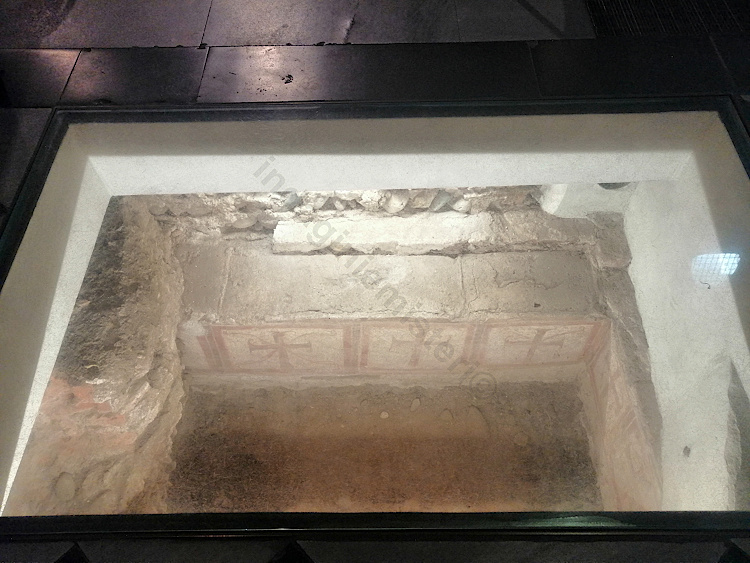
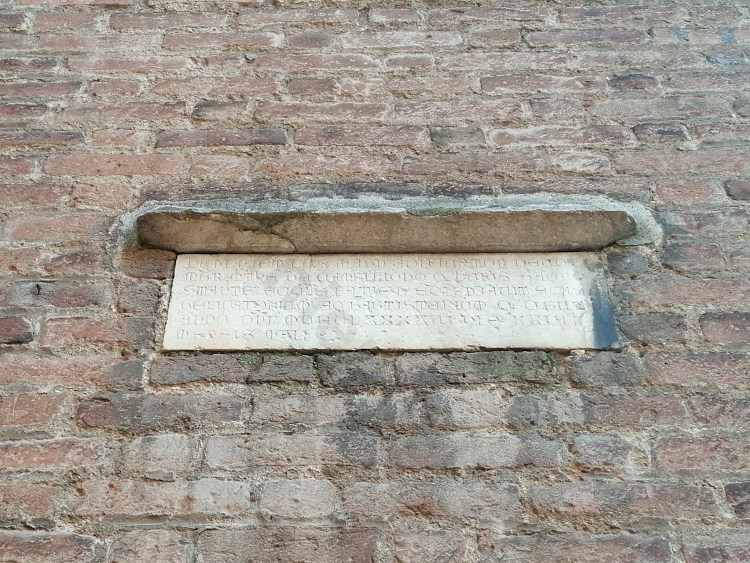
In the Jubilee year 1300, the city of Monza had just begun the construction of a new cathedral. The ancient basilica no longer met the ambitions of a rapidly expanding city. There arose a need for a larger and more solemn church, one that could symbolise civic power while reconnecting with the earlier tradition. It was therefore decided to rebuild the Duomo on the remains of the ancient Lombard-era building, almost entirely overwriting it. The patrons of this new architectural phase were the Visconti of Milan. They had consolidated their rule over the region only a few decades earlier.
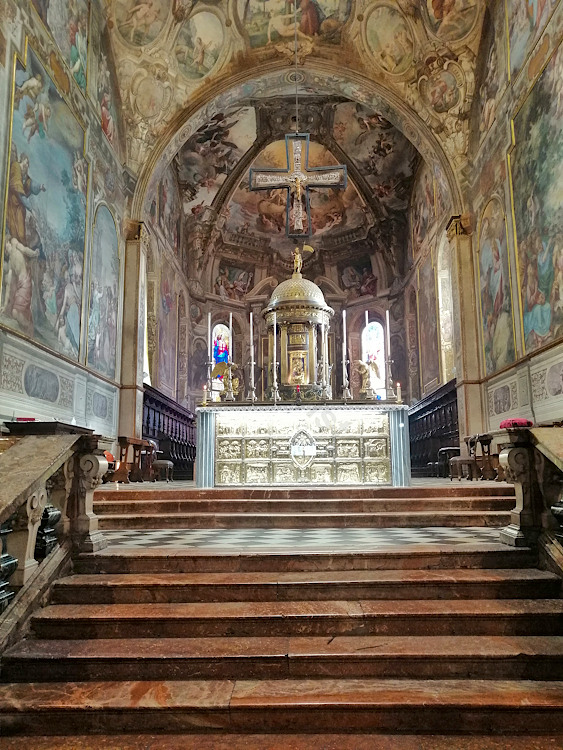
The new building initially featured sober and essential forms, inspired by contemporary Franciscan architecture. The only significant exception was the precious silver antependium, created by Borgino dal Pozzo around 1350. From 1360 onwards, however, the project underwent a new transformation. It was redesigned in Gothic style, adopting a more ornate language that still defines the cathedral’s appearance today. Matteo da Campione, a master of the Campionese school, served as protomagister of this elaborate phase and designed the splendid façade and the elegant nave chapels.
The Cathedral of Monza
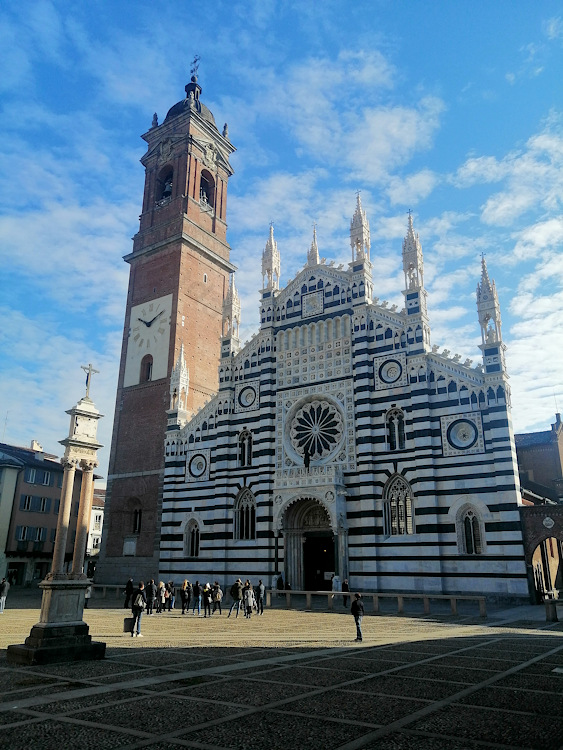
The cathedral today has a Latin cross plan with three naves. Its façade appears gabled, with Gothic pinnacles and crowning tabernacles, distinguished by alternating courses of white and black marble. Particularly notable is the large rose window, set within a rectangular frame. A tall porch shelters the main entrance, above which stands the statue of the patron saint, Saint John the Baptist. The bell tower, as it stands today, dates to the Counter-Reformation period since the architect Pellegrino Tibaldi rebuilt it.
While the Gothic exterior of the façade has been carefully preserved, the interior has undergone extensive alterations in the Mannerist and Baroque periods. Little of the original painted decoration survives. The only exception is the Zavattari fresco cycle in the chapel, dedicated to the cathedral’s legendary founder, Theodelinda.
The Chapel of Theodelinda and a delicate dynastic transition
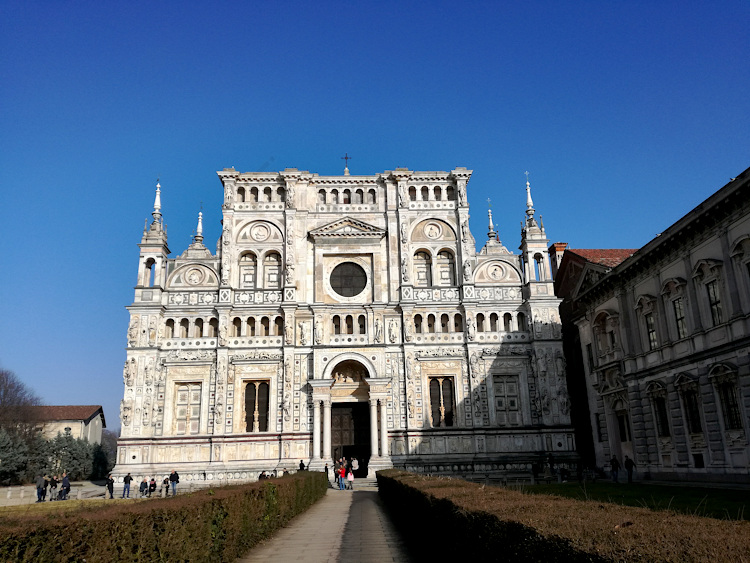
The fifteenth century was a time of profound change. In the arts, the revival of classical forms gave rise to the Renaissance. Furthermore, Humanism introduced a new conception of humankind and the world. The fifteenth century marked the final stages of a Middle Ages that was drawing to a close. Nevertheless, parts of the old world still clung to tradition. One can observe the resurgence of Gothic art, now “International” or “Courtly” Gothic, linked to the noble courts of Europe. Among these, the Visconti of Milan continued to play a leading role, acting as fervent patrons of the Gothic legacy and commissioning cycles of frescoes and monumental buildings, such as Milan Cathedral (1386) and the Certosa of Pavia (1396), both commissioned by Gian Galeazzo Visconti.
The threatened continuity of the Visconti dynasty
The Visconti seemed destined to rule Milan for many centuries to come. When Filippo Maria Visconti came to power, he could hardly imagine that events would one day call his dynasty’s continuity into question. A man of sharp intelligence but reserved and introverted by nature, he faced the painful realisation in the final years of his life that he had no male heir. From his two marriages, first to Beatrice Lascaris and then to Maria of Savoy, no children were born. His only offspring was Bianca Maria, born of an extramarital relationship with the noblewoman Agnes del Maino.
This situation effectively placed the succession to the throne in jeopardy. Filippo Maria therefore recognised Bianca Maria as his heir. He hoped that an advantageous marriage might preserve the unity of the duchy. In 1441, Bianca Maria married Francesco Sforza. Just three years later, she gave birth to the long-awaited heir, Galeazzo Maria, firstborn of the new Sforza dynasty.
Bianca Maria as Theodelinda
To contemporaries, Bianca Maria’s story seemed to echo an epic tale from the past: that of Theodelinda. The Lombard queen thus provided a distinguished precedent, lending the Visconti succession an aura of legitimacy and sacredness. Despite the differences in time and context, Bianca Maria appeared as the symbolic heir of the Lombard queen. This evocative historical parallel underlies the most prestigious pictorial cycle preserved in Monza Cathedral. Between 1441 and 1446, shortly after her marriage to Francesco Sforza, the terminal chapel of the left nave was decorated with a vast cycle of frescoes dedicated to the life of Theodelinda, consisting of forty-five scenes.
The Chapel of Theodelinda
The patron of the Chapel of Theodelinda remains unknown. Although scholars have suggested the involvement of Filippo Maria Visconti, the issue is in fact far more complex. Contemporary chronicles describe the duke as anything but favourable towards his son-in-law Francesco Sforza. In the final years of his life he even named Alfonso of Aragon as his preferred successor. It is therefore more likely that the fresco cycle originated from a local commission, supportive of a dynastic solution within the Duchy of Milan.
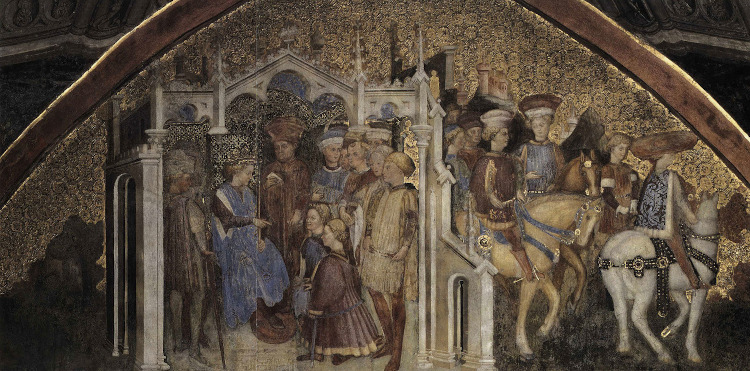
The fresco cycle was entrusted to the workshop of the Zavattari. This was one of the finest expressions of late Lombard Gothic in the fifteenth century. The artists narrated with extraordinary skill the story of Queen Theodelinda, drawn from Paul the Deacon’s Historia Langobardorum and Bonincontro Morigia’s Chronicon Modoetiense. They arranged the forty-five scenes, executed in fresco with extensive use of dry tempera, across five registers. The paintings are richly adorned with raised applications of precious metals, especially gold and silver. The technique makes the Chapel of Theodelinda resemble a precious illuminated manuscript rather than a wall painting. Today, much of the metal leaf has oxidised and turned dark. In the fifteenth century, however, the splendour must have been overwhelming for visitors.
Description of the scenes
As many as twenty-eight scenes depict wedding banquets, a clear reference to Theodelinda’s two marriages. This is no incidental detail: it evokes the significance of Bianca Maria Visconti’s marriage to Francesco Sforza. The first twenty-three episodes narrate the love story of Theodelinda and Authari up to his death; from the twenty-fourth to the thirty-first, we can observe the marriage between the queen and Agilulf. From this point onwards, the cycle shows a clear stylistic break, suggesting a second phase of execution or patronage. The artists introduce the legendary foundation of the cathedral by Theodelinda. The building appears surrounded by a form of divine protection. As long as the Lombards care for it, Saint John will protect them from their enemies. The final scenes, from the forty-first to the forty-fifth, depict Emperor Constans’s failed attempt to conquer the kingdom.
The Iron Crown and the Tomb of Theodelinda
The Chapel of Theodelinda underwent several alterations at the end of the nineteenth century. At that time, King Umberto I commissioned the creation of a reliquary altar intended to house the most precious object in the Duomo Treasury: the Iron Crown. In the same period, the architect Luca Beltrami also moved the sarcophagus of Queen Theodelinda into the chapel.
The Iron Crown
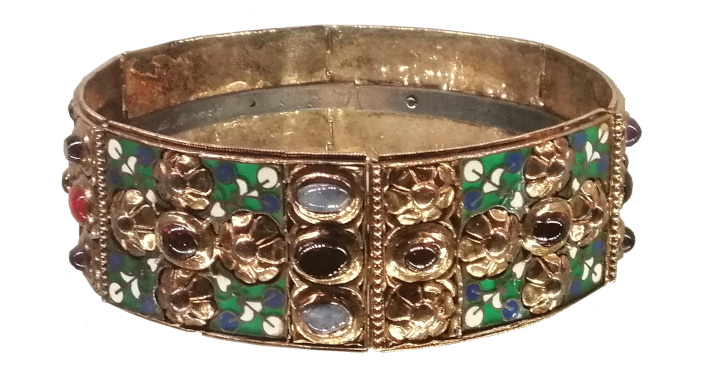
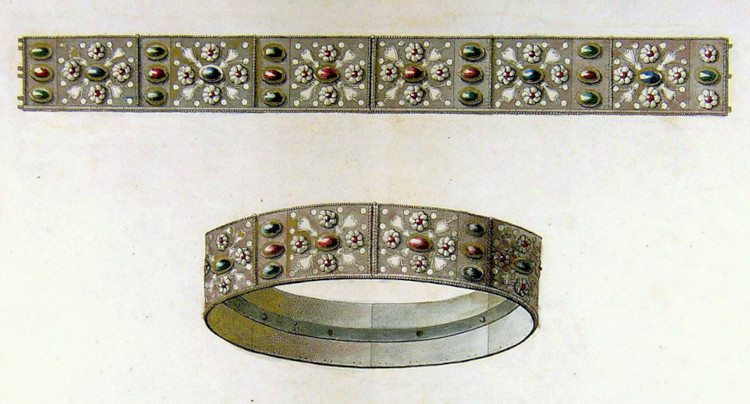
The Iron Crown is one of the most important relics of Christendom, and a profound aura of sanctity envelops its centuries-long history. The royal object consists of six gold plates, finely decorated with precious gems including sapphires, amethysts and garnets, held together by a metal ring approximately 15 cm in diameter. According to tradition, this ring was made by melting one of the iron nails from the crucifixion of Christ3. Saint Ambrose of Milan, in De obitu Theodosii, recounts that Helena, mother of Emperor Constantine, recovered the nail in 3264. The queen then had it set into a helmet-crown for her son. The Emperor Theodosius, who resided there, later brought the ornament to Milan.
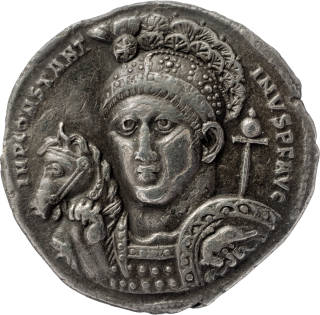
The extraordinary association between a relic of the Passion and a symbol of temporal power has profoundly shaped the history of the Crown and, with it, that of entire kingdoms. To attain full legitimacy, the emperors of the Holy Roman Empire had to receive it alongside two other crowns: the silver crown of Aachen and the golden crown bestowed by the Pope in Rome as a sign of imperial dignity. Frederick Barbarossa, for example, received the Iron Crown in 1155 in the Basilica of San Michele Maggiore in Pavia.
The Iron Crown in Monza
It is uncertain when the Iron Crown arrived in Monza. According to one widely accepted hypothesis, it was initially kept in the Basilica of Saint Ambrose in Milan and later transferred to Brianza by Archbishop Aribert of Intimiano6. Aribert himself also attests to the relic’s reputed miraculous power, claiming that it had alleviated some of his physical suffering. Alternatively, the Crown may have been taken to Constantinople after the fall of the Western Roman Empire and only later brought to Monza on the initiative of Theodoric the Great, who maintained one of his principal residences there.
Recent studies and hypotheses on the Crown
Studies carried out in recent decades have shown that the inner ring is made of silver rather than iron. To reconcile this with the tradition of the Holy Nail, it has been suggested that the relic metal may originally have been used to create two small iron arches, intended to secure the crown to Emperor Constantine’s helmet. Supporting this hypothesis, several holes and traces of iron oxidation have been identified on the object.
However, it is not known what became of these elements, nor whether they still survive, as the Iron Crown has undergone numerous restorations and alterations over the centuries. It is known, for example, that Theodoric added various precious stones; moreover, the object originally consisted of eight plates, which were reduced to six in the fourteenth century. From that point onwards, the crown appears smaller in depictions, no longer suitable to encircle an adult head. According to some scholars, it was the goldsmith Antellotto Bracciforte who restored it in 1345, after the loss of the two plates, inserting the silver band.
A possible scientific dating of the Crown
In recent years, the crown has been subjected to radiocarbon dating7. The results have produced a complex picture: some elements of the object date to the fifth–sixth centuries, while others belong to a period between the seventh and tenth centuries. This dual chronology suggests that the Iron Crown underwent significant restoration or reworking in the Carolingian period. In particular, it has been hypothesised that the work was carried out for the coronation of Pepin, son of Charlemagne.
The cult of the Iron Crown, from Saint Charles Borromeo to Napoleon
After a brief period in Avignon, where it was transferred during the papal crusade against the Visconti, the Iron Crown returned to Monza. There it soon became the object of deep popular devotion. Its official recognition as a relic came in 1576 through the initiative of Saint Charles Borromeo. The cardinal nevertheless decreed that the solemn procession of the Crown, held on the third Sunday of September through the streets of the city, should be accompanied by a parallel veneration of another Holy Nail, preserved in Milan Cathedral. The Iron Crown returned to prominence in the early nineteenth century. On 26 May 1805, Napoleon Bonaparte crowned himself King of Italy by placing it upon his own head, uttering the famous words: “God has given it to me, woe to anyone who touches it!”
Samuele Corrente Naso
Notes
- Bonincontro Morigia, Chronicon Modoetiense, 1340-1350. ↩︎
- Paul the Deacon, Historia Langobardorum, translated by W. Dudley Foulke, LL.D, University of Pennsylvania, 1907. ↩︎
- Bartolomeo Zucchi, Breve storia della corona ferrea, 1602. ↩︎
- Saint Ambrose, De obitu Theodosii. ↩︎
- Dietrich.Klose – Own work, CC BY-SA 3.0, link to the image. ↩︎
- C. Bertelli, La Corona Ferrea: corona o reliquia?, in Studi Monzesi 2002. ↩︎
- C. Bertelli, La Corona Ferrea, Skira, Ginevra-Milano, 2017. ↩︎