

Category: Cultures
-
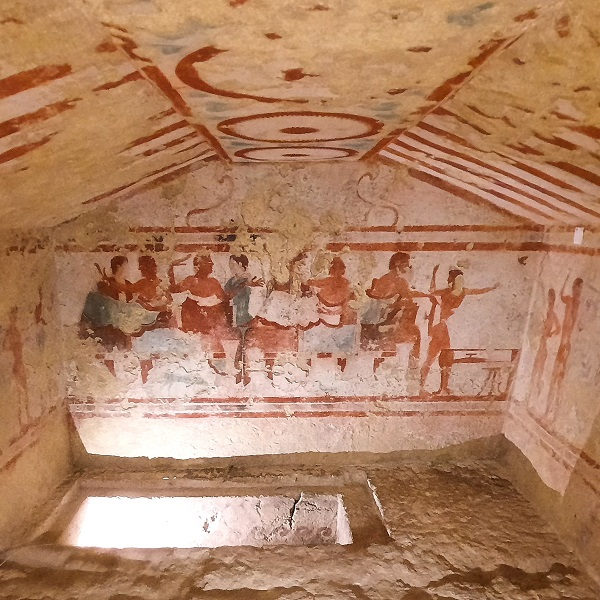
Monterozzi necropolis and a journey into the underworld
We could never have known anything about the Etruscans, a people of ancient Italy who lived between the 9th and 1st centuries B.C., if they had not given death the same importance as life. In the 7th and 6th centuries B.C., when Etruscan civilization reached its military and cultural peak, houses and temples were built…
-
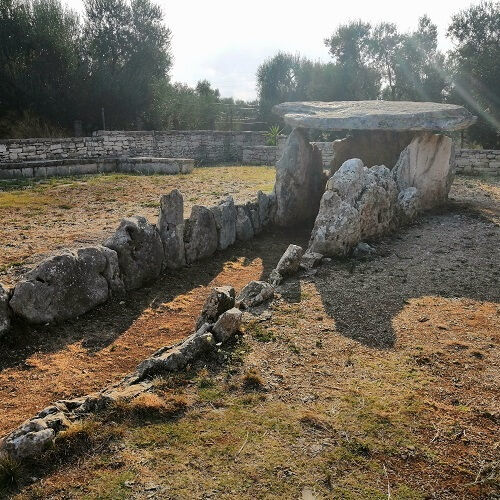
The Dolmen of Chianca: Ancestral Rites of Passage
On 6 August 1909, archaeologists Francesco Samarelli and Angelo Mosso set out for Bisceglie, in the narrow stretch of Apulia lying between the gentle hills of the Murge plateau and the waters of the Adriatic Sea. Local farmers had reported the emergence of large stone slabs while working the fields in the rural area known…
-

The cult of Isis in Benevento
“Isis the Great, the God’s Mother, Sothis, Queen of the Gods, Lady of the Sky, the Earth, and the Netherworld. Regnal year eight, under the majesty of the Horus, the Strong Bull, the King of Upper and Lower Egypt, the Lord of the Two Lands, Horus, the God’s Son, beloved of all the gods, the…
-

The menhirs of Sardinia and the cult of the ancestors
What drove men to erect stone monuments, raise the sacred above the earth and compose paths oriented towards aspirations of eternity? The menhirs of Sardinia traced enigmatic ways that are shrouded in mystery to our eyes today. Stone is hard to penetrate in its hardness, like the intentions, ideas and common feelings of the first…
-

The sanctuary of Monte d’Accoddi, sacred centre of Sardinia
At the dawn of the third millennium BC, at the sanctuary of Monte d’Accoddi someone lifted his eyes to the sky. In the firmament, during the night, he saw the divine image of the mother, the great goddess, creator and nurturer of the universe. By her will, even the stars, like beings on earth, were…
-

The domus de janas, underground tombs in Sardinia
In Sardinia, stone has reflected the early spiritual tension aimed at self-knowledge and understanding of the world since the Palaeolithic era. The material is shaped to communicate one’s feelings, and explicit anthropomorphic features emerge in the art. Architecture becomes a complete expression of an incomprehensible sacredness. The ancient Sardinians delineated thresholds between distant worlds. They…
-

The pre-Nuragic mother goddess of Sardinia
The gradual evolution of cultures in pre-Nuragic Sardinia reveals humanity’s inner quest. Through rituals and beliefs new metaphysical frames of meaning, new interpretations of existence are delineated. The feeling of an order beyond nature, which transcends into the sphere of the sacred, is embodied in the archetypal image of a female deity related to fertility.…
-

Nuragic: before the Giants
It was the age of heroes and giants, who stood as sentinels of the centuries on the threshold between life and death, flesh and stone. It was the age of imperishable warriors, arcane guardians of a proud and millenary civilisation. Hypnotic eyes reached beyond the horizon towards the placid quartz beaches of the Sinis peninsula,…
-
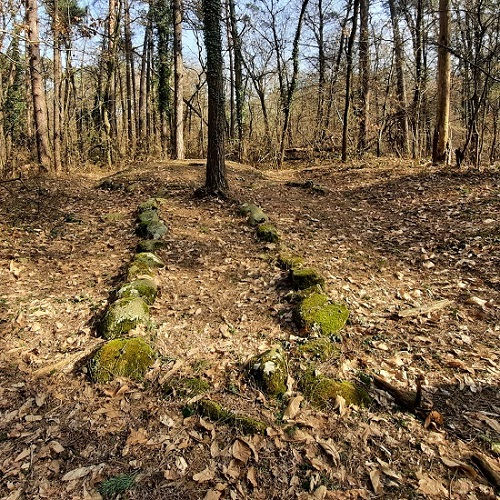
The “cromlechs” of the Golasecca necropolis
In the Ticino Park, near Golasecca in the province of Varese, lies a wooded area dominated by chestnut and dense oak forests. It can be reached via an uneven, sometimes wild path, evoking the distant era of the first human settlements. Between the 9th and 6th centuries BC, several communities, bound by a shared cultural…
-
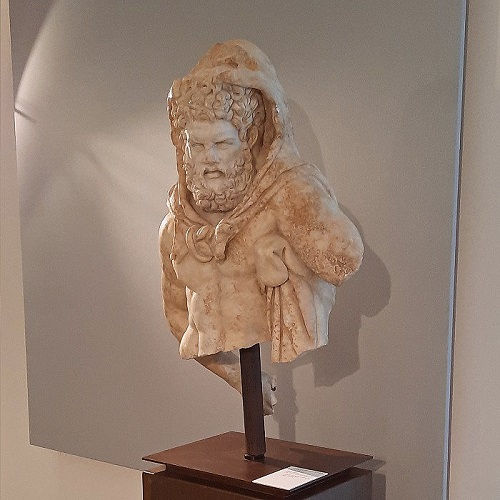
The sanctuary of Hercules Victor in Tivoli
Since antiquity, Hercules has represented the archetype of strength and invincibility. Nevertheless, the Roman deity is associated with cultic phenomena of different manifestations, also related to agro-pastoral activities and trade. The figure of Hercules derives from a syncretism between the warrior attributes of the Greek Heracles and the sylvan attributes of the Etruscan god Hercules.…