

Category: Cultures
-
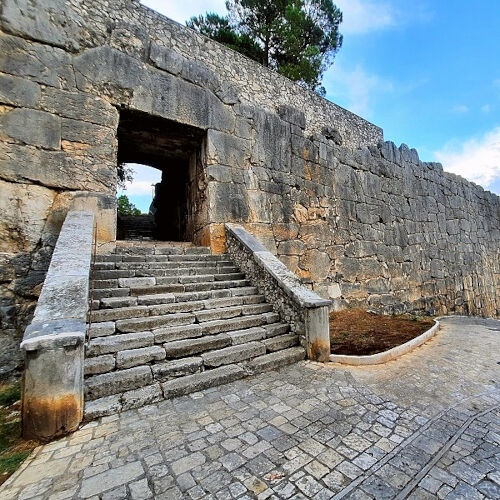
The megalithic walls of Alatri, where stone is timeless
The civita of Alatri stood on the slope of a hill above a stream, a branch of the Liri river. There, five hundred metres above the sea level, was the acropolis of the ancient city. Still visible are the quadrangular base of a small temple in Tuscan order, a reconstruction of which is now in…
-
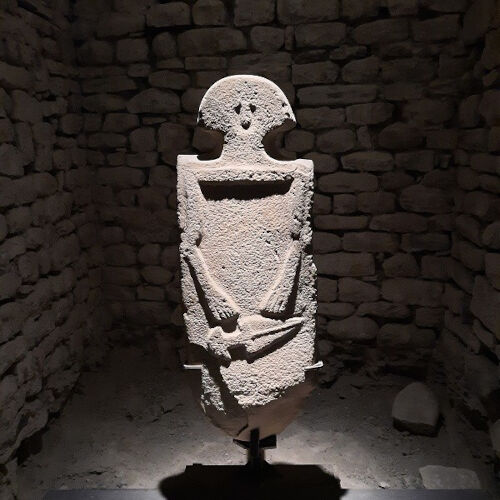
The Lunigiana stele statues
An anthropomorphic figure, which seems to have re-emerged from a forgotten and primordial age of man, stares at visitors with an enigmatic archaic smile. The statue, made of sandstone, has a semicircular head. Its stylised face has a simple U-shape, but mysteriously takes on an expressiveness that transcends time. It seems to look into the…
-
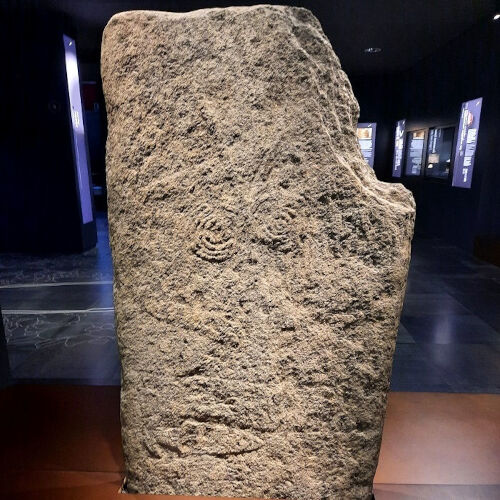
The megalithic area of Saint-Martin-de-Corléans of Aosta
Throughout human history there have been places that our ancestors recognised as sacred. From those remote beginnings, they have preserved enduring evidence of that hierophany. Places of worship since antiquity, they safeguard monumental traces of our past. They tell the story of a lost age and of a distant passage through time, when rituals were…
-
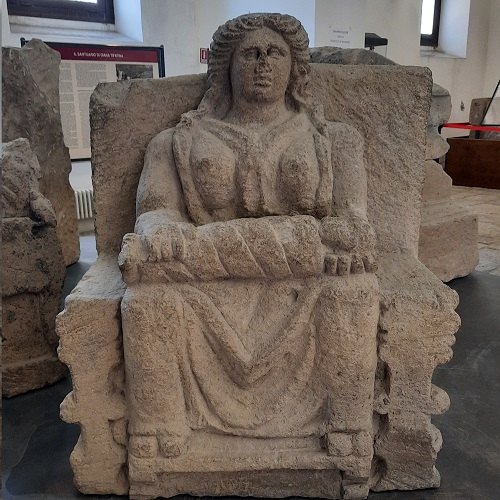
The Mother goddesses of Capua
In Petrara locality, among the countryside of Curti, an ancient tufa podium was found1. There, within an area owned by the Patturelli family, the remains of a complex cult building and dozens of carved mothers, the so-called Matres Matutae (Mother Goddesses) of ancient Capua, were discovered. The site was located not far from the Porta…
-
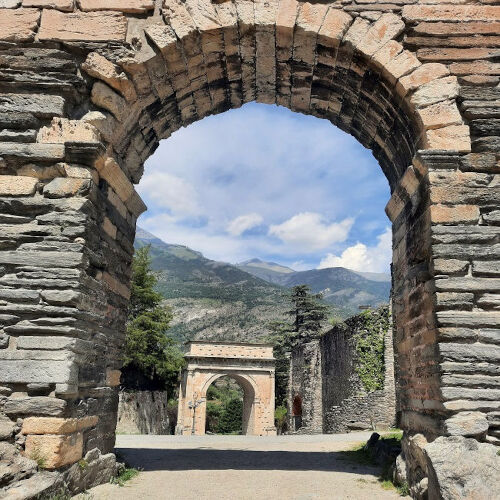
Segusium, the ancient remains of the Roman Susa
Cottius, king of the Cottii, was a prudent and far-sighted ruler. After Caesar’s assassination in 44 B.C., Rome plunged into a bloody civil war. Hence, several Gallic peoples in the Alpine regions seized the opportunity to rebel. The Salassi, in particular, repeatedly entrenched themselves in the mountain passes in the hope of escaping Roman rule.…
-
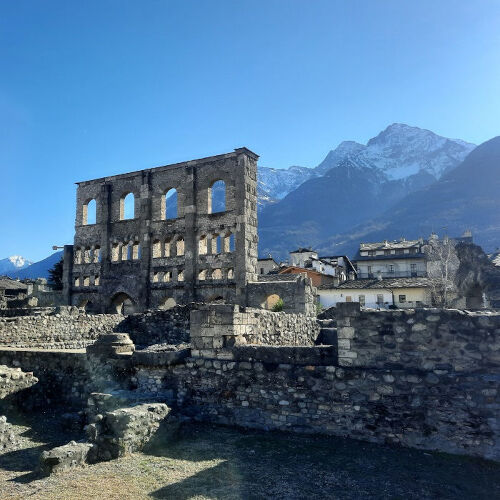
Augusta Praetoria, the Roman Aosta
Augusta Praetoria Salassorum was the Roman colony founded by Emperor Augustus to secure control over the routes crossing the Alps. It corresponds to present-day Aosta. From this crucial road junction, the consular road from Mediolanum (Milan) split into two main routes towards Gaul: one crossed the Little Saint Bernard Pass and continued to Lugdunum (Lyon),…
-

Hieroglyphs and sacred symbols in Ancient Egypt
When Jean François Champollion succeeded in deciphering hieroglyphs for the first time in 1822, thanks to the discovery of the Rosetta Stone, he had to overcome considerable difficulties of interpretation. The writing of the Ancient Egyptians shows a very different conception of the world from that of modern man. First of all, he had to…
-
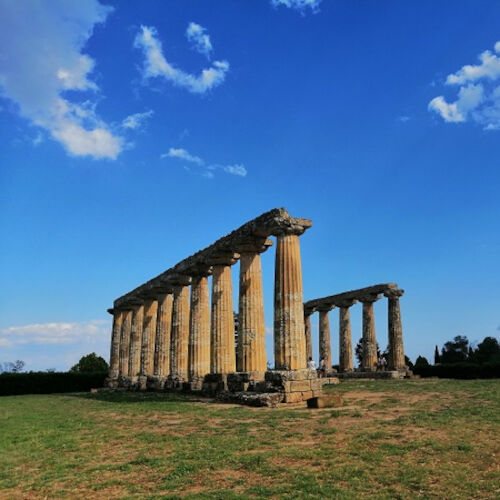
The Palatine Tables of Metaponto
On the right bank of the Bradano river, inside the archaeological area of Metapontum, are the remains of ancient columns. They seem to have defied time imperishable, immortal with their graceful fluting and elegant Doric capitals. They are called “Palatine Tables”, a heritage of ancient historical events. It is said that in the shadow of…
-

The Lion-man, the oldest sculpture in the world
Since the 19th century, the Hohlenstein-Stadel cave in Germany had already been the subject of various archaeological excavations. The importance of the site was therefore well known, but when Robert Wetzel and Otto Völzing started a new excavation campaign between 1937 and 1939, they could not imagine what they would find. Indeed, on 25 August…